Differences Between PAUT and TOFD in Non-Destructive Testing

In the realm of Non-Destructive Testing (NDT), ultrasonic inspection methods are widely used to detect internal flaws without damaging components. Two advanced ultrasonic methods often employed in industrial inspections are Phased Array Ultrasonic Testing (PAUT) and Time-of-Flight Diffraction (TOFD). Though both rely on ultrasonic waves, their working principles, strengths, and limitations differ significantly. Below is a comparative overview.
How It Works
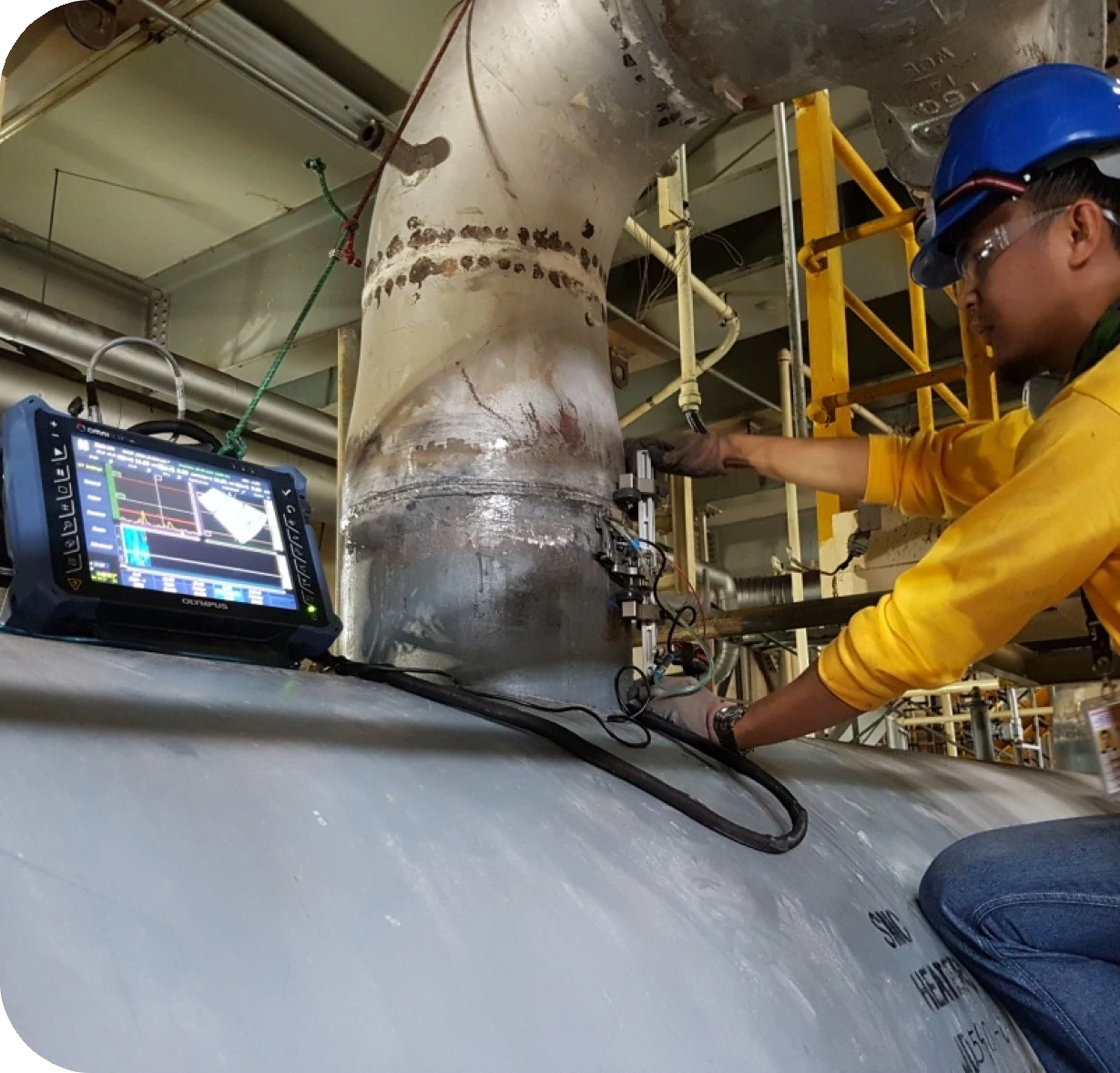
PAUT uses a bank (array) of ultrasonic transducer elements, each of which can be independently pulsed with time delays (phasing). By controlling the timing of each element, the combined wavefront can be steered, focused, and scanned electronically—without physically moving the probe.
Advantages / Strengths
- Faster inspection compared to conventional single-probe UT, due to electronic scanning.
- Capable of producing images in multiple formats (A, B, C, D scans) which aid visualization.
- High flexibility for inspecting complex geometries since beams can be directed at needed angles.
- Digital data recording and reproducibility.
- Can detect volumetric flaws (porosity, voids) and also planar defects if orientation is favorable.
Limitations
- Sizing of crack tips may be less accurate than diffraction-based methods like TOFD.
- Near-surface defects might be harder to detect depending on signal paths and attenuation.
- Requires careful interpretation skills and experienced operators.
- Potential for "dead zones," especially near surfaces, depending on probe configuration.
How It Works
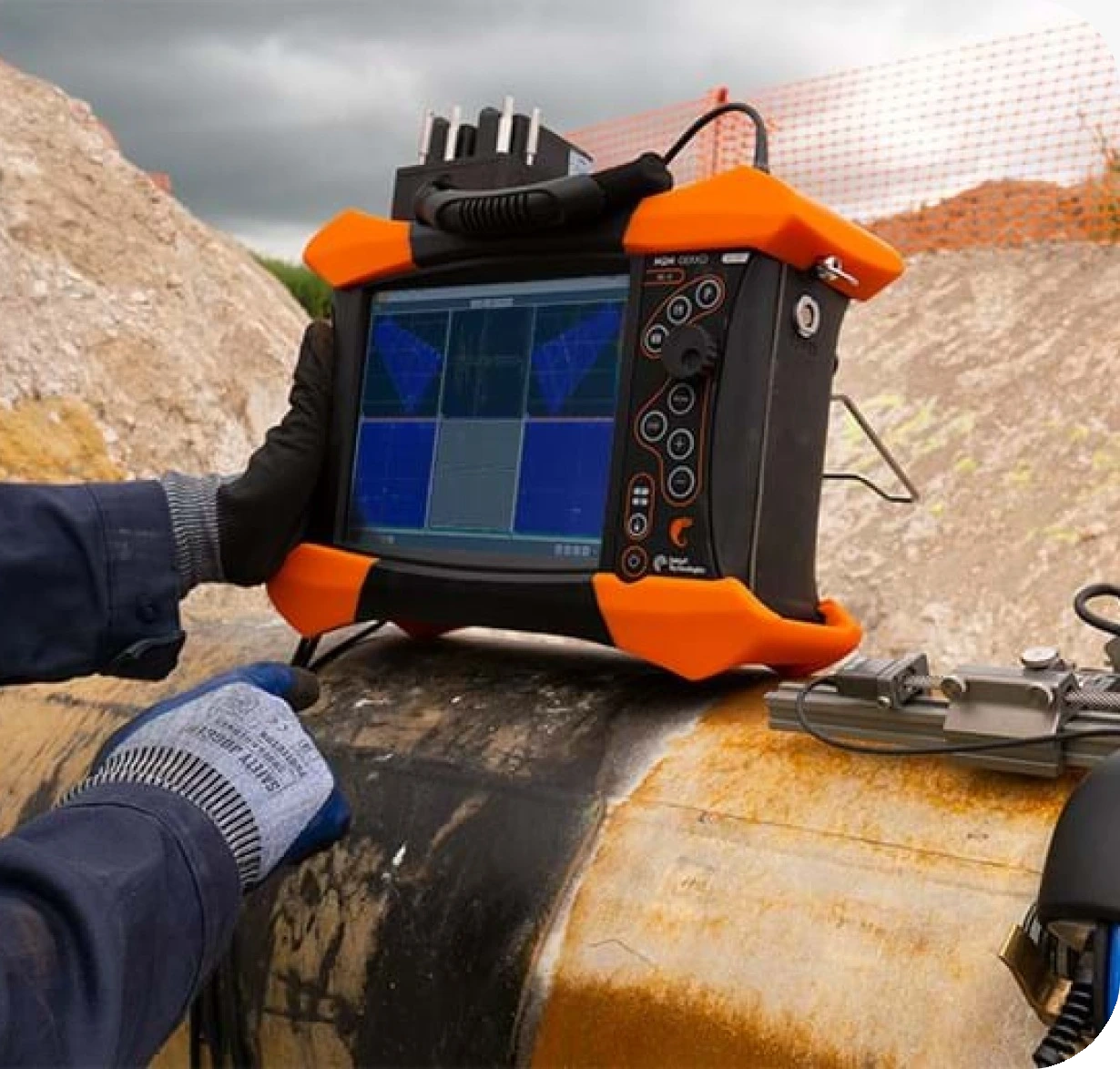
TOFD harnesses diffraction phenomena of ultrasonic waves at the tips of flaws (crack tips). When a pulse wave strikes a flaw tip, part of the energy diffracts toward a receiver. By measuring the time of flight of that diffracted wave and knowing geometry and wave speed, one can compute the location and size of the defect.
Advantages / Strengths
- High accuracy in sizing (especially depth) of planar defects (e.g. cracks).
- Strong probability of detection and low false alarms.
- Amplitude-independent technique: less sensitive to defect orientation.
- Often involves a single linear scan (single pass), making inspections efficient.
- Digital recording of data for permanent records.
- Works well in combination with other UT techniques (PAUT, pulse-echo) to cover near-surface limitations.
Limitations
- Coverage limitations for near-surface and far-surface due to "dead zones".
- Requires access on both sides of the component for transmitter and receiver placement.
- Less effective on very thin materials (e.g. < ~8 mm) or small-diameter pipes.
- Can struggle near the surface due to interference from lateral waves.
- Interpretation of TOFD data demands skilled operators.
In industrial practice, PAUT and TOFD are frequently deployed in tandem for weld inspections that demand both detection sensitivity and precise sizing. Combined in membantu meminimalkan risiko melakukan cacat kritis.